
Best Water Filter For Lead Removal 2026 – (Expert Reviews)
Having access to clean and pure drinking water is life-changing. Unfortunately, not all of us are lucky enough to have purified water at our disposal. You could be dealing with a poor city water supply that is high in chlorine and sulfuric odors. Or maybe you live in a rural environment with a well water system where water is typically high in heavy metals such as lead. These situations and many more can cause homeowners and renters headaches when trying to find clean water.

Luckily, the water technology within the water filtration game has evolved so much lately that you can remove these harmful contaminants without the need to throw down thousands of dollars. In this article, we will break down some of the best ways to deal with water that is high in lead. As we all know, lead can be harmful to our bodies, and limiting your exposure to this water-based metal is extremely important.
We will discuss some of the options that you have to remove lead from your water supplies. There are a few different options you can choose from for lead removal. You can look for the best whole-house water filter for lead removal or maybe the best water filter pitcher for lead removal. We know these types of decisions can be difficult, but we are confident that by the end of this article, we will find you the best water filter for lead removal.
Top Pick
Recommended Lead Water Filter |
|||
|---|---|---|---|
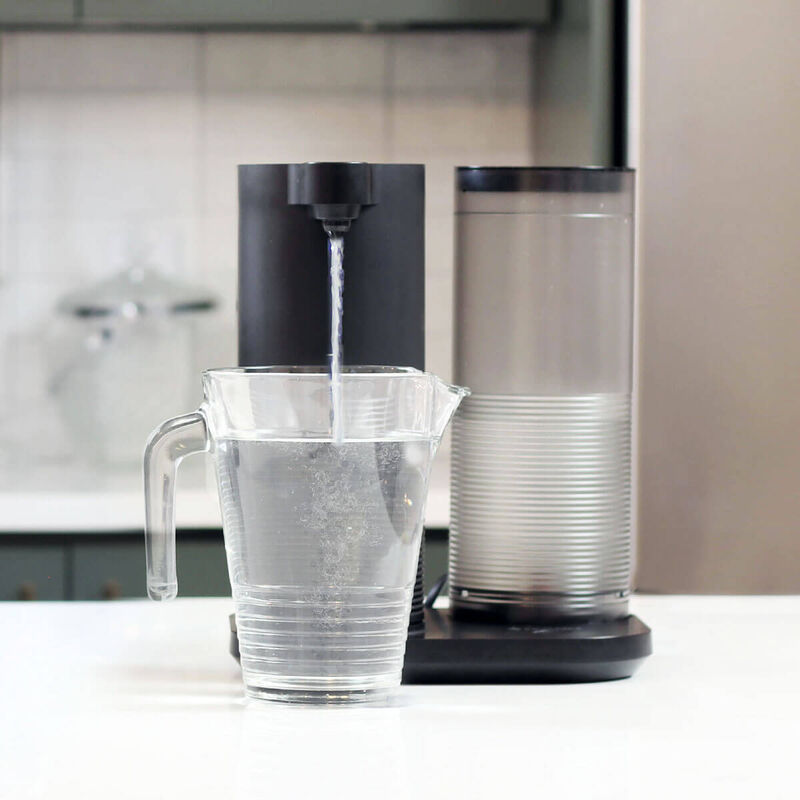
Aquasana Clean Water Machine |
TOP PICK
|
|
View Latest Price
|
SpringWell Whole House Lead & Cyst Removal System |

EDITOR’S CHOICE
|
|
View Latest Price |
Clearly Filtered Water Filter Pitcher |

Lead Water Filter Pitcher
|
|
View Latest Price |
Frizzlife Under Sink Lead Removal water Filter |

BEST BUDGET
|
|
View Latest Price |
Compare the Best Lead Filters at a Glance
Which Filter Has the Strongest Lead-Reduction Evidence?
Among the filters we compared, Clearly Filtered has the strongest finished-system evidence. Its pitcher is certified by IAPMO R&T to NSF/ANSI 53 for lead reduction, with independent lab results showing up to 99.9% reduction across the rated filter life.
Frizzlife MK99 is close behind with IAPMO certification and more than 99% lead reduction. Others rely more heavily on component certifications or independent lab reports.
Which Filter Gives You the Best Value?
Frizzlife MK99 gives you the strongest value once you look past the purchase price. Its 10,000-gallon capacity and replaceable FZ-2 inner core keep ongoing costs unusually low, at less than $20 per change.
That works out far better long-term than filters that require a full cartridge replacement every few months, while still keeping certified lead reduction in the picture.
Which Filter Is Easiest to Install and Maintain?
Clearly Filtered is the easiest choice by far. You rinse the filter, drop it into the pitcher, and you are done. No tools, plumbing, or leak risk.
If you prefer filtered water straight from the tap, Filtrete Maximum is the easier under-sink option. Its auto-shutoff valve and quarter-turn cartridge make filter changes quick and surprisingly mess-free.
How We Picked Filters You Can Trust
What Counts as Strong Lead-Reduction Evidence?
The strongest evidence is an active certification for the exact filter model, not just a claim that the product “meets NSF standards.” For point-of-use filters, NSF/ANSI 53 is the key standard for lead reduction. Reverse osmosis systems may also be certified under NSF/ANSI 58.
What I look for is pretty simple:
- Active system-level certification: The exact model appears in an official NSF, IAPMO R&T, or WQA product directory.
- Lead-specific performance: Testing shows lead dropping from a 150 ppb challenge level to 5 ppb or less.
- Independent lab testing: If there is no formal system certification, the next best thing is testing from an ISO 17025 accredited or state-certified independent laboratory.
- Full filter-life testing: A convincing report tests performance across the rated lifespan, not just one fresh sample.
Component certifications such as NSF/ANSI 61 or 372 are useful, but they prove material safety, not that the finished filter actually reduces lead. That distinction matters quite a bit.
How We Verify the Exact Filter Model
A certification logo on the box is not enough for me. Manufacturers often sell several filters under one brand name, and the lead certification may apply to only one exact model or replacement element.
I verify it in three places:
- Find the exact model number. I use the alpha-numeric code printed on the system or replacement cartridge, not just a name like Frizzlife or Brita. This matters with systems such as the MK99, where the FZ-2 replacement element is the part that also needs to match the lead claim.
- Check the Performance Data Sheet (PDS). The contaminant table should specifically list lead, ideally with results at both pH 6.5 and pH 8.5. Strong data shows an influent challenge around 150 ppb dropping below 5 ppb.
- Cross-check the live certification database. I search the exact model in the NSF International Database, IAPMO Product Listing Directory, or WQA Gold Seal Directory and look for an active NSF/ANSI 53 lead-reduction listing.
That last check catches a surprising amount of fuzzy marketing. A badge can stay on a product page long after a model changes, so the active listing matters more than the logo.
How We Score Lead Performance, Cost, and Fit
We score every filter across three areas, but lead performance carries the most weight. A cheap or easy filter does not move very far up the list if the evidence behind its lead reduction is weak.
| What we score | Weight | What earns a stronger score |
| Lead performance | 40% | Strong system-level certification, verified reduction below 5 ppb, and performance that holds through the rated filter life |
| Cost | 30% | Low total cost of ownership, long filter capacity, reasonable replacement costs, and a low cost per gallon |
| Fit and usability | 30% | Good flow, manageable installation, sensible space requirements, and easy removal or maintenance |
For lead performance, NSF/ANSI 53 or Standard 58 certification carries the most weight. Transparent ISO 17025 independent lab testing can still score well, while NSF 61 or 372 material certifications alone get much less credit because they do not prove the filter actually removes lead.
Cost is based on what the system costs to own, not just what it costs at checkout. A $70 filter with inexpensive yearly core replacements can easily beat a cheaper pitcher that burns through costly cartridges.
Fit is the practical part. A reverse osmosis system may dominate lead removal but lose points for installation, space, or complexity, while an inline under-sink filter can score well simply because it gives you strong protection without becoming a daily nuisance.
See Which Popular Filters We Left Out
A few familiar names did not make the cut. In most cases, the issue was not that the product is useless, but that its lead evidence, long-term cost, or day-to-day reliability was weaker than the filters we kept.
| Filter | Why we left it out |
| Standard Brita Everyday Pitcher | It lacks specialized lead filtration media and is not certified to NSF/ANSI Standard 53 for lead reduction. |
| ZeroWater 5-Stage Filtration Pitcher | The ion-exchange matrix can clog quickly in high-TDS water, which makes replacement costs hard to justify. |
| Big Berkey Gravity-Fed System | It relies on self-published reports and lacks active, official system-level NSF/ANSI certification. |
| PUR Plus Faucet Mount | The plastic attachment collar can crack under water pressure, creating a risk of bypass leaks. |
| EveryDrop Refrigerator Filter 1 | Its restrictive internal block can noticeably reduce dispenser flow. |
| AquaBliss High Output Shower Filter | Its KDF-55 media is aimed at free chlorine, not dissolved or particulate lead. |
| Woder WD-S-8K-DC Under-Sink Filter | It carries component-level safety badges, but lacks complete system-level verification for lead spikes. |
Some of these can still make sense for taste, chlorine, portability, or general filtration. They just did not meet the same bar for lead-specific evidence and practical fit.
Best Water Filter For Lead Removal
1. SpringWell Whole House Lead Removal System

Highlighted Features
SpringWell pulled out all the stops with their whole-home lead and cyst removal system. For starters, they have among the best technical support and customer service that we have come across thus far.
Their risk-free trial period of 6 months is the longest in the industry, and even though it is a whole-home system, it is simple to install for most homeowners. The documentation it includes is very good, and their online DIY videos will help, too.
In terms of performance, the SpringWell system checks nearly all the boxes that one could want in a whole-home water filtration system. The 0.5-micron filter is the perfect size to manage both soluble and insoluble materials effectively.
Water testing has proven that it does a wonderful job with the toughest and most common water contaminants. There are significant reductions in chlorine, lead, and waterborne parasites.
It has a great overall warranty, including a lifetime warranty on all tank and valve components. There are additional features that can be purchased separately, like a UV-light that helps with additional bacteria removal.
What We Like:
What We Didn’t Like:
2. Frizzlife Under-Sink Lead-Removing Water Filter

Highlighted Features
This waterline-attached filter will work nearly anywhere in your home. It is a simple direct connection to the waterline, and it will work with any water you throw its way. The filter is great at removing lead and the bad tastes/odors associated with chlorine. But while it’s filtering out all the bad stuff, it will keep the essential minerals we all need from the water, like calcium.
I tested this water filter on my home sink, refrigerator line, and my shower water line and saw improvements in all of them! It has an awesome shutoff valve that will keep water flowing while you are changing the filter; you will never be without water!
The flow rate of the water is maximized with this filter as well. Maintaining a 2 GPM flow rate, this filter can deal with even the biggest contaminants and still produce crisp, clean water. If you are looking for an affordable yet effective water filter for lead, this may be a great option for you.
What We Like:
What We Didn’t Like:
3. Clearly Filtered Lead Removal Water Filter Pitcher

Highlighted Features
There is nothing more convenient than being able to fill a basic water pitcher and almost immediately reap the benefits of having clean drinking water. The Clearly Filtered water pitcher is large enough that I am not constantly refilling it but still fits in my refrigerator with ease.
The sleekly designed water filter features a filtering system that removes well over 200 contaminants, including lead and other heavy metals. One of the biggest complaints we get when it comes to filtering water pitchers is the time it takes the water to run through it. I had no issues with the time it takes to filter the water.
If you’re looking for a simple yet effective water filter for lead removal, look no further!
What We Like:
What We Didn’t Like:
4. Brita Tap Lead Remove Water Filter System

Highlighted Features
With each filter providing over 100 gallons of clean and purified water, the Brita inline sink filter is an excellent choice. By simply adding the filter to your sink’s nozzle, you can have clean water at your disposal without the need for a bulky filter or any under-sink system. The convenience of this inline water filter cannot be overstated.
It does a great job of removing chlorine and, most importantly, lead from your water supply. The quick-release button makes changing the filters out a breeze, usually around 30 seconds.
The filters have an extra sediment filter layer that is specialized to remove heavy metals or solids that are typically associated with lead. Just twist this on your sink for amazing drinking water right away!
What We Like:
What We Didn’t Like:
5. iSpring Whole House Lead Filtration System

Highlighted Features
This whole-home water filtering is an excellent first line of defense in the fight against hard water. By installing the iSpring system directly into your main water supply, you will see a reduction in contaminants in the water coming from all your appliances.
By combining multiple different stages of purification and finishing with a specific lead-reducing filter, it is hard to find a better option for those of you looking for a whole-home system.
The activated carbon filter does a great job of removing chlorine smell and taste from water. By installing the iSpring filtering system, you are giving yourself peace of mind that all your water is clean and pure.
What We Like:
What We Didn’t Like:
6. Home Master Undersink Lead Filter System

Highlighted Features
Removing lead from your water supply is an extremely important aspect of managing your home drinking water. Lead can be a tough and tricky element to remove from your water supply, but thanks to the Home Master system, it just got a whole lot easier!
This 7-stage filtration system combines the best water filtering stages along with a low-discharge RO system.
Because Reverse Osmosis (RO) requires the water that did not make it through the process to be expelled, finding an RO system that minimizes the amount of water wasted is extremely important. Due to the non-electric permeate pump, you will see less discharged water than most comparable RO systems.
Installing the Home Master system is extremely straightforward. Everything you need to install the filter yourself is included in the package, along with in-depth instructions that are crystal clear.
In addition, Home Master provides some of the best online and telephone support in the industry. Their library of videos that walk you through each installation stage is also a massive help.
When it comes to removing lead and other contaminants, water testing has proven that there will be a reduction of at least 97% in sediment, heavy metals, chlorine, lead, and other contaminants. The non-electric pump does a tremendous job keeping the water pressure steady and ensures that the RO system will function at its best.
What We Like:
What We Didn’t Like:
7. Woder WD-S-8K-DC Water Filtration System

The entire Woder water filtration system weighs mere pounds and is smaller than the average water filter by a significant margin. This is a great feature for a water filter because it will virtually fit in any cupboard or under any sink that you wish to install a water filter. The installation takes mere minutes to attach to a 3/8” water line and can be used with virtually any water supply that has a faucet.
By comparing the water testing results before and after installation, we were amazed by the filtering capabilities of the Woder under-the-sink filter.
The most common contaminant found in municipal tap water supplies is chlorine, and if you are dealing with a surplus of chlorine, you know just how much that can affect you. Chlorine affects the odor, taste, and overall quality of your water. By removing it, you will improve not only the water’s taste, but also how it affects your skin and keeps it moisturized.
The Woder may look like a simple device, but its long-lasting and effective filter makes it a great option for anyone looking to improve their water supply.
What We Like:
What We Didn’t Like:
8. Travel Berkey Gravity-Fed Water Filter

Highlighted Features
As people, we are constantly on the go. Up until recently, we would have to rely on bottled water for all our needs, but thanks to the Berkey travel filter, we can bring our filtering system anywhere we go!
This 1.5-gallon traveling-sized filter fits easily into your RV or camper and will purify your water within minutes. Because the filter was designed for travelers, it is top of the line at removing bacteria, cysts, and, most importantly, lead.
You can carry this mobile water filter with you anywhere. Recently, I tested it when I was camping, and I was able to use natural water sources as my main source of drinking water. Just fill it with water from anywhere and use the spigot at the bottom to pour it into your bottle or cup! For one, it looks great, and it also does its job of filtering out lead and other particles.
The filters last for around 6,000 gallons of water and are super easy to change. If you are an RVer or camper, this may be the best choice for you to remove lead from water.
What We Like:
What We Didn’t Like:
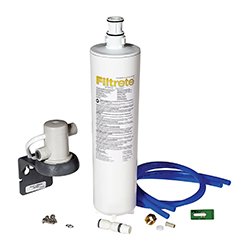
9. Filtrete Maximum Lead Water Filtration System
Highlighted Features
3M/Filtrete is one of the most trusted names in industrial technology and home improvement. This under-sink water filtration system can be attached to your sink water line in no time. It is certified to NSF/ANSI Standard 42 and standard 53making it a reliable and trusted option.
The 1,500-gallon filter was specifically designed to remove lead and other contaminants typically found in a municipal water supply. One of my favorite things about this water filtration system is the support you get from Filtrete.
You can sign up for a text message reminder that will send you a message when it is time to change the filter! No more attempting to calculate the amount of water you’ve run through or trying to remember the last time you changed it!
What We Like:
What We Didn’t Like:
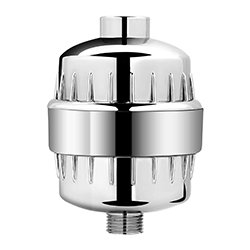
10. AquaBliss Universal Shower Lead Water Filter
Highlighted Features
If you are looking for an affordable filter that will soften your shower water and filter out impurities, then the AquaBliss may be the one you are looking for. While there is not a lot of information about the flow rate on the market, we do know that the 12-step filtration process that the AquaBliss runs through has multiple stages that inject your water with beneficial elements to help with your hair, skin, and nails.
Installation is a breeze with this filtering head, and the AquaBliss SF100 will show results of cleaner, clearer water right away. Included is an advanced revitalizing filter that adds numerous stages for your water to pass through that boost water oxygen and add revitalizing minerals to the water.
It starts with an ultra-fine stainless-steel fine mesh that rids the water of larger impurities and ends with another mesh layer combined with micro-porous PP cotton to capture any sediment that may have squeaked through.
What We Like:
What We Didn’t Like:
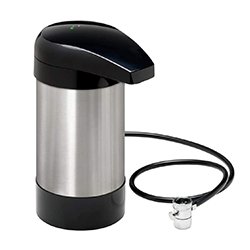
11. WaterChef C7000 Countertop Lead Water System
Highlighted Features
Most countertop filtering systems come with a reservoir section that needs to be refilled when the water runs out. But the WaterChef countertop model connects directly to your sink faucet, making the water supply virtually endless.
Having a water line connection is especially nice for people who will use a lot of water throughout the day. Another reason why this would be beneficial is for folks who rely on their sink water to clean and do dishes. If you’ve ever attempted to wash a glass with hard water, you know exactly what I am talking about. Untreated water tends to leave water marks and streaks on your glassware which gives it an unclean image.
When it comes to the filtering properties of the WaterChef system, it uses a patented “Big Block” filtration system. This filtering system is specifically designed to remove lead from your water supply. Our testing proves that it will remove upwards of 99.999% of lead and other heavy metal contaminants.
What We Like:
What We Didn’t Like:
How to Pick The Best Water Filters for Lead
We know what you’re thinking… How do I choose one? This is a question we are all too familiar with, but luckily, we are here to help.
People often ask for the best water filter for lead removal, but what we have noticed over the years is that there is no single best product out there. Every home is dealing with different water supplies and different challenges, and we will all have different uses for our lead-removing water filter.
Below, you will find a guide that will help you decide what the best water filter for lead is for you.
What Should I Be Looking For?
In order to identify the best water filter for lead, we need to know exactly what you want. If you are looking to remove lead from your entire home, your needs will be different than somebody who is trying to get clean drinking water from their sink.
Remember, there are tons of different types of filters available that can remove lead efficiently. Many of these filters will also provide added minerals to your water to make it even healthier. But the question you must answer is: At what point in my home do I want to start the filtering process?
If you are on a municipal water supply that is considered “clean enough’ by most standards, you may be comfortable with using that water for some things and not others. Keep reading to learn more about the different situations and how your home water supply will dictate what the best water filter for lead is.
Whole-Home Filtration Systems
I often get asked about whether a family should install a full-home filtering system or maybe even a water softener. This depends on several things, but the biggest one is the quality of your main water supply.
If you are dealing with well water or water that has no formal municipal or city water purification, you are most likely going to want to investigate a whole-home water supply. As you saw from our reviews, many of the best filters for lead are simple water pitchers or even under-sink units that can be placed there for faucet usage. While these will help with your sink and drinking water needs, those are the only places where the filtering will come into play.
Showers, hoses, and sinks that did not have anything installed under them will most likely still all have the contaminant elements within the water supply because you are not filtering that water. If your water is high in heavy metals, total dissolved solids, and other elements, you may want to go with a whole home water filtering system to ensure that every water source within your home has clean and lead-free water.
Under Sink Filtering Systems
Quickly becoming one of the most common filter choices, the under-sink model is a great choice for people who want to get the most out of their water supply. I constantly get complaints from homeowners about how their city or municipal water supplies have chlorine odors and metallic tastes. The reason this happens is that the standard levels for healthy water consumption do not say that these (and other) elements must be completely removed; they just must hit a certain amount to be considered healthy.
Most folks that are dealing with the above situation simply want to know what an affordable solution is to fix their drinking and dishwater supply. Enter the under-sink filtration system.
By tapping into your already existing sink water line, you can add an under-sink filtering system in a mere 30 minutes. These are great options for people who do not want to limit the amount of filtered water at their disposal.
Make sure you do your research on these filtering systems. Some of them come with a dedicated water faucet that you will install on your sink or counter. Others will simply use the existing faucet you already have. One is not necessarily better than the other; it all comes down to personal preference.
Water Filtering Pitchers
By far, the simplest option we have investigated, and the most affordable, is the self-filtering water pitcher. Simply fill it up with your water, give it some time to run through the filter, and you’re ready to go! There are hundreds of filtration pitchers on the market today, and deciding on a specific one to suit your needs takes a little bit of research.
The first thing I look at when deciding on a self-filtering water pitcher is the size. I bought a small-sized pitcher once, and since I drink water constantly, I was always having to fill it up! Make sure that you buy a big enough pitcher to accommodate the amount of water you and your family will drink throughout the day.
The second thing is the filtering capability. When it comes to filtering pitchers, the quality of the filters is all over the board. Some will only filter out chlorine, while others can remove up to 99.99% of all bacteria and other contaminants. Understanding your water supply is imperative.
Conclusion
We cannot stress how important it is to filter lead out of your water. Typically, when the lead is present, there are numerous other heavy metals and contaminants with it. Having the ability to remove lead is one thing, but combining that with 99.99% of all water-based contaminants is truly a life-changing endeavor.
I think it is safe to say that there are a ton of options available to remove lead from your water supply. When people approach me asking for the best water filter for lead, I always remind them that best for one person may not be the best for the next. Do your research and figure out exactly what your goals are and make an educated decision from there.
If you just want better drinking water, it could be as simple as buying the best water pitcher for lead removal. Other folks will have other needs like a whole house water filter or maybe an under-sink model so they can clean water for dishes and other things.
At the end of the day, our recommendations come from our hands-on approach and are the important aspects we investigate when deciding on a lead-filtering system. We sincerely hope that this guide pointed you in the right direction to help you choose the best water filter for lead for your home and your specific situation!