
Best Water Softener Systems For You Home – (Our #1 Pick Is All You Need)
Water softeners are quickly becoming a required appliance for many people who are dealing with hard water characteristics like chlorine and magnesium. Without a softening system in your home, these calcified minerals can attach to your water pipes and appliances, causing major headaches for both you and your checkbook.

As water softening, technology evolves, more and more options are available to the consumer giving you endless options for a full, customized water softening system that is suited to your home’s water supply.
The most trusted water softening and filtration brands on the planet continue to add more and more features to their water softening units, ensuring that there is something for everyone.
Each home is different in terms of its water makeup, and because there are so many options available, odds are there is something that will work for you. By following the in-depth review breakdown and our handy buying guide below, we will help direct you towards the best water softener system on the market for you and your family.
First, Why Do I Need a Water Softener?
This is a question that will have a different answer for each one of you that is reading this article. For starters, there are some visual things that can tell you whether you are dealing with a hard water treatment system.
The first thing you should look at it is your dishes and glassware. If you are seeing a ton of hard water spots on glasses, then that is a tell-tale sign that you have a large amount of calcium in your waterline. Additionally, if you notice an odd smell, like sulfur in your water, this is another major sign of the need for a water softener.
If you have the means to test your water, this is the best way to know about your hard water treatment systems and the best way to have a definitive answer if a water softener is right for you.
Water testing will give you a direct and accurate count of how many grains per gallon you are dealing with, and the number of dissolved minerals like calcium and magnesium.
If you see a notable amount of these minerals in your water, it is best that you investigate installing a soft water softener.
What Size Water Softener Should You Get?
Both salt-based and salt-free water softeners will come in a variety of shapes and sizes. Most systems have an include pre-filter that removes larger sediment and grain water from your water, too. It is important to remember this because those filters will have a maximum capacity rating along with a maximum water softener capacity as well.
When it comes to choosing the best size water softener for you, make sure you consider the number of bathrooms in your home and the number of people. Many hard water softeners, both types, will come with a bathroom number rating.
The higher this number, the more water your softener will be able to handle. Each system will have a different formula for determining the perfect size for you; make sure you investigate this before buying. A combination of the total bathrooms within your home and the number of people will usually be the criteria for most sizing questions.
How Much Does a Water Softener Cost?
Water softeners, like all appliances, will fluctuate heavily in regard to the costs associated. The major factors that will contribute to costs include capacity, efficiency, additional filtration features, and overall reliability.
You will see water softener costs for smaller, single bathroom homes starting in the low $400-range, while other water treatment systems that are designed to handle larger homes and have a filter along with a softener will go for several thousands of dollars.
It is important to remember that many hard water softeners are affordable to run, and they are one of the most long-lasting appliances within your home.
The initial investment may seem steep, but over time, they are highly affordable, and the added benefits of how they protect your other appliances make them worth it almost right away.
Best Water Softener System Reviews
1. SpringWell FutureSoft Salt-Free Water Softener Review
Highlighted Features
The SpringWell salt-free system comes with everything you need to improve the longevity of your appliances and remove some of those pesky hardness particles from your water supply. It has a great track record for being a reliable hard water softening unit at an affordable price. The included sediment filter is housed in a coconut shell container, which boasts its unique contaminant fighting qualities.
Installing the Springwell system is one of our favorite aspects of this system. It comes with in-depth instructions, and the support that the company provides is top-notch.
They have a bevy of online support manuals and DIY videos that allow homeowners to install this system with ease.
After the easy installation, you will see immediate results. The chlorine levels are virtually eliminated, and magnesium also takes a hit.
If you are trying to remove some of that gross limescale buildup, this system will be your best friend. On average, after a few weeks of usage, you will see a reduction of over 96%.

This Springwell system is impressive. It works especially well for those who live in cities and are dealing with municipal water supplies that are heavy in fluoride and sodium. One noticeable thing was the water pressure after the installation was not as affected as many other whole home water filters and softeners.
What I Like:
What I Didn’t Like:
2. SoftPro Elite High-Efficiency City Water Softener Review

Highlighted Features
When it comes to the SoftPro System, the word that comes to mind is efficiency. They went out of their way to ensure that their salt-based water softening system does not waste any unnecessary water, along with ensuring that homeowners have full control over their water softener.
The first thing you will notice is that this system comes with a crystal-clear LED control valve that allows you to control the system simply. You can use this to place the system in vacation mode or refresh the system at your ease.
When comparing the system’s efficiency ratings to comparable water softeners, the SoftPro system is among the best.
On average, the SoftPro discharges nearly 65% less water than other salt-based water systems during the regeneration process.
Additionally, you will save money on both salt and total operational costs by about 70% on both accounts.
SoftPro also offers you the ability to upgrade your water softening with several upgrade options that you can add to your system. These include multi-stage filter systems, carbon filters, and quick-flow valves of any size.
What We Like:
What We Didn’t Like:
3. Pelican NaturSoft Water Softener Alternative Review

Highlighted Features
The Pelican water softener alternative is a salt-free water softener that combines the typical water de-ionization process with a coconut-shell housed sediment filter.
The first thing you will notice about this system is that it is built from quality materials. It is a solid, sturdy system that NSF/ANSI has certified to be safe to operate and built solid.
We like having options, and the Pelican makes sure to provide this by giving is the option to choose from a system designed to handle 1-3 separate bathrooms or 3-6.
There is an included sediment filter that does a wonderful job of removing large rocks, grain water, and sediments from your water connection before it even hits the softener.
Water testing has proven that this system removes these grains but also does a wonderful job of lowering the levels of hardness minerals that can cause calcification and scale buildup. The system guarantees to remove upwards of 99.6% of calcium buildup, and water testing confirms this.
What We Like:
What We Didn’t Like:
4. Fleck 5600SXT Ion Exchange Water Softener System Review

Highlighted Features
We cannot say enough good things about the Fleck 5600 SXT valve and ion exchange water softening system. The valve itself is loaded with features that allow you to have complete control over your system, including a vacation mode that will suspend the system’s intake, ensuring you are not wasting water.
We appreciate the options that Fleck offers in terms of grain capacity. There are five different options ranging from 24,000 to 64,000 grains; the best one for you will depend on how much water your home uses and the quality of groundwater.
Additionally, Fleck offers several optional upgrades to ensure that you are getting the absolute most out of your water softener.
These things include reverse osmosis (RO) alkaline add-ons specifically designed for drinking water, carbon filters, and high-efficiency resin that will lessen wastewater and improve salt efficiency.
Another thing we appreciate about the Fleck system is the easy installation process. They provide detailed instructions and a ton of online support options that ensure you will easily install the system by yourself.
What We Like:
What We Didn’t Like:
5. FilterSmart Whole House Water Filter & Salt-Free Combo

Highlighted Features
The dual-tank FilterSmart water treatment system truly takes everything you could want in a water filtration system and rolls into a compact package that will fit in a tight space in your home.
The installation is among the easiest in the business, too. FilterSmart is known for its technical support, and in-depth installation guides, and this system is no exception. They have several online resources to leverage, and we are confident you will find it easy to install on your own.
In terms of performance, it is hard to look past the 1,000,000-gallon capacity, the longest in the business, and quite an impressive start. The rest of the whole house water softener system is one of the best whole house water softeners and filters we have gotten to experience.
The combined filtering agents and the resin-based softening process removes more contaminants than any other system on our list.
The pre-filter is also a nice touch; it removes large sediment and debris before it even reaches the softener and filtration tanks.
What We Like:
What We Didn’t Like:
6. Nuvo H20 Dphb-a Home Water Softener System

Highlighted Features
The Nuvo system is the smallest and most compact system that we have reviewed thus far. It is our favorite for smaller homes or mobile homes where space can be at a premium.
The system is extremely simple, too, making installation take less than an hour in most cases. Nuvo offers a ton of resources to help with installation and maintenance as well; it truly is a user-friendly system.
The package will come with everything you need to install, including a mounting bracket that is solid, along with a housing wrench that will allow you to easily change filters.
When it comes to the water softening aspects of the system, for the price and size, you are getting phenomenal value.
The system will remove existing scale buildup among your pipes and appliances, which will elongate the life of your appliances tenfold. Additionally, it will help prevent any future scale buildup. Cartridge life is decent and is rated to handle up to 20,000 gallons of water before needing to be replaced. Replacing them is simple too, and they are affordable replacement cartridges that come directly from Nuvo.
What We Like:
What We Didn’t Like:
7. ABCwaters Built Fleck 5600sXT 48,000 Grain Water Softener

Highlighted Features
Powered by the Fleck 5600SXT control valve, the ABCwaters ion exchange system is among the most reliable and most popular systems out there. They truly go above and beyond to ensure that you have everything you need to install this system when it arrives at your home.
The pre-filled resin tank, along with the pre-programmed Fleck control valve, removes any confusion about the control valve and helps you avoid lugging around heavy bags of resin.
Water testing proved that the system was ultra-effective at removing hard water molecules that derive from magnesium and calcium within your water supply.
These are two of the leading causes of hard water and scale buildup, making them among the most important things to consider when you are choosing the best water softeners for you.
Water testing showed that calcium and magnesium were virtually removed from the water line, ensuring that you will see a reduction in scale buildup in your appliances and pipes.
What We Like:
What We Didn’t Like:
8. Whirlpool WHESFC Pro Series Softener System

Highlighted Features
The Whirpool Hybrid system is among the most unique systems that we have reviewed up to this point. It combines the best of both water softening systems and basic filtration devices into one small and compact system that runs effectively and efficiently. It comes with the NSF’s gold stamp of approval that ensures it is safe to operate, and the water it produces is safe to consume.
The system includes everything you need to install the system on your own. It is simple to install thanks to Whirpool’s in-depth instructional manual and an endless library of support videos that are available online to use at your expense.
This hybrid system comes with a secondary filter that removes sediment and contaminants, but the most notable part is that this filter never needs to be replaced. It is cleaned internally by the system, and because of this, you will never have to deal with cleaning or replacing the filter, nor will you see any deduction in flow rate due to a slow filter.
What We Like:
What We Didn’t Like:
9. EcoPure EP31 31,000 Grain Water Softener System

Highlighted Features
We were highly impressed with the features that the EcoPure provides, especially for the price point that this system falls under. The easy-to-use control panel will allow you to easily configure your system to your exact needs, place it in vacation mode, and will also warn you when the salt level is getting low.
On the subject of salt, this system features a salt sensing technology that calculates the exact amount of salt it needs to effectively treat the water. This guarantees that you are not wasting any salt and will save you money in the long run on refills.
One thing we like to see is an NSF/ANSI certification, and the EcoPure features a certification that confirms a major reduction hardness-causing particles.
Water testing has proven that you will see a major deduction in calcium and magnesium, which are two of the leading causes of water hardness. Additionally, you will see a reduction in iron, which is a bonus for a water softener, especially at this price.
What We Like:
What We Didn’t Like:
10. Water Boss 74011 Water Conditioner

Highlighted Features
If you are looking for a smaller, and more compact softening system with several additional benefits, the WaterBoss system may be the best choice for you.
For starters, its small and compact design is perfect for RVs, trailers, or cabins where space is at a premium. It is perfect for these types of places where you may not rely on that water supply every day throughout the home.
For a system at this price point, we were impressed with the additional features that it includes. Most systems around this price will include your basic water softening agents, but not much else. With the Water Boss, you will get solid a softening system with the added benefit of a sediment filter and the ability to remove a large chunk of iron. Overall, this is the perfect system for a smaller home or RVing family.
What We Like:
What We Didn’t Like:
11. Pentair WS48-56SXT10 Fleck Water Softener

Highlighted Features
If you are dealing with constantly having to rewash your dishes and glassware once it is removed from your dishwasher, then this water treatment system should be on your list.
Right after installation, the hard water spots and dinginess that were constantly left on my glasses were completely removed with this fleck ion exchange water softener. To me, that was worth the price alone. You will benefit from the quality of your showers, and the overall taste of the water, too!
Water testing proved that there is a massive reduction of magnesium and calcium, the two biggest culprits of causing hard water in your home.
In addition to the bevy of water improvements, the fleck ion exchange water softener system also includes several safety features that make it a choice that leaves you with peace of mind.
The Fleck valve has a variety of features that will alarm you of any issues. There is also a safety float that will prevent any leaks from your tank, which is a major help to your wallet.
What We Like:
What We Didn’t Like:
Types of Water Softeners
In general, there are two specific types of water softeners that you will see when you begin your investigation into the best water treatment systems for you. Both systems have their own unique characteristics and features, but regardless of what you choose, it will improve your water and make it healthier and better for your pipes and appliances.
Salt-Based Water Softeners

The most popular water softening solution is a salt-based system. This system uses crystallized salt pellets as a buffer and membrane to remove hard water traits from water molecules and capture them before the water flows back into your home’s central water supply.
Salt-Based water softener systems are often the more preferred solution because they will remove the negative minerals and contaminants from the water supply, rather than just condition the water to ‘disrupt’ these water molecules.
The salt pellets that are in the water softener’s holding tank will act as a hard water buffer. As water flows through the system and salt pellets, the salt pellets have such a small Micron rating that any dissolved hard water contaminant will be stopped in its track, while healthy water minerals are sifted through with it.
As the hard water molecules are trapped within the salt pellets, the salt pellets will slowly dissolve until it is time to replenish the salt tank.
Salt-Free Water Softeners
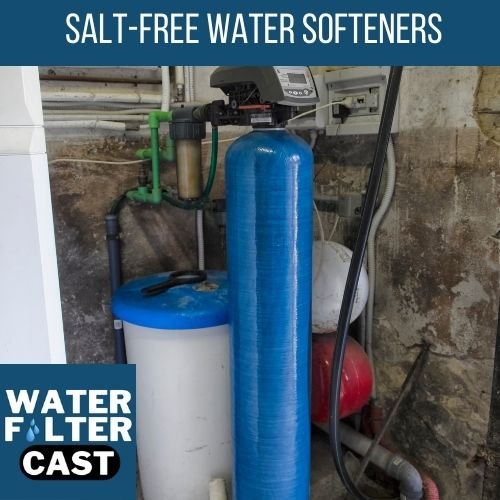
The salt-free solution to hard water issues is an alternative to the salt-based system that is preferred by people that do not want to replenish the salt tank or deal with any maintenance.
Salt-Free systems are typically maintenance-free and are super simple to deal with after the installation is complete. Additionally, they are typically smaller and more affordable than salt-based systems because they technically do not remove any contaminants from the water supply.
Instead of complete removal of hard water contaminants, a salt-free system will rather rework and ‘condition’ the water supply and its water molecules to not be able to stick to pipes and faucets. If scale buildup within your appliances and pipes is your biggest concern, then a salt-free system is a phenomenal solution for you. But keep in mind, these systems do not remove anything, nor does it technically ‘soften’ the water. It conditions it.
How do I Choose the Best Water Softener System?
Salt-Based vs. Salt-Free Water Softener Systems

This is the most common question I receive regarding water softeners, and it is a great question. The answer is largely based on what you are wanting to accomplish by installing a water softener. If you are not very concerned about the water’s molecular makeup and about removing water molecules but rather focused on keeping your pipes and appliances clear, then a salt-free system is your choice.
They have far less maintenance, and are typically cheaper, but keep in mind they do not remove anything from the water, so you will still be consuming the dissolved minerals, which will not be harmful but may not be as tasty.
If you want to get the absolute most out of your water softener system and wish to not only protect your pipes and appliances but also make your water taste perfectly and be as healthy as can be, a salt-based system should be on your mind. They require slightly more maintenance since there is usually a pre-filter included, but this added maintenance ensures that your water is not only good for your appliances but also good for your health.
Water Pressure
Water softeners, and water filtration solutions are notorious for slowing down water pressure throughout your home. If you think about it, it does make sense as to why. Water goes through several levels of filtration and therefore, it is hard to expect that the water pressure would be able to continue at the same rate as when it goes through your home completely unimpeded.
One thing that you will need to investigate is how much a specific water softener will affect your water pressure. It is safe to assume that they will all have an effect of some sort on it but there are systems that deal with this better than others.
When I chose my personal water softening solution, I made sure that the system was designed with pressure in mind, and I was able to find one where the pressure drop is not noticeable. Each softening system will have a PSI rating, look at this before making your decision. Keep in mind, if you do not pay attention to your pre-filter longevity and basic maintenance schedule, all systems will slow down eventually.
Technology
We have already discussed the differences in technology between salt-based systems and salt-free systems, but there are more things you can be aware of in terms of technology. For starters, you will notice that nearly all the soft water system solutions out there will offer several additional components that will enhance your water even further.
This is where that water test, we discussed comes into play. Each water supply will come loaded with different contaminants and different levels of hardness molecules.
For example, someone who lives in a more mountainous area will most likely have a much higher amount of rock and sediment in their water, while someone else who is in a wetland area, may have more bacteria and protozoan. Depending on the additional options that your water softener system has, these may be beneficial to you.
For example, an area with higher bacteria may benefit from the popular add-on, the UV-Light. This is an optional accessory for many systems that claim to help combat bacteria and protozoa-like contaminants.
If you are dealing with higher levels of these things, the light may make sense to you, but maybe not for our mountain home. There, they are likely dealing with sediment, rock, and harder material. Many softeners will allow you to add on multiple sediment filters, or sometimes multiple filters to remove these things before they ever reach your water softening unit.
DIY Installation
When it comes to installing your water softener, like most things on the list, it will depend on the model and size you choose. Often, salt-free systems tend to be less involved when it comes to DIY installation. These are usually smaller systems with fewer moving parts, which makes them easy to install on your own without the need of a plumber. Because salt-free systems do not require a salt-holding tank, they are also better for small spaces where you may not be able to fit a tank.
Salt-Based systems can waiver in their degree of installation difficulty. They usually require a larger holding tank for salt, and if you are using it every day, getting a small tank will not make sense because of the constant need to replenish the salt. However, if you can follow directions well and are not worried about an extra hour or two of installation, even salt-based systems can be easily installed by the homeowner.
The most important thing you can do is verify that the company provides good technical support and that they have a solid installation manual. Most systems are now designed with the homeowner in mind and if the company offers good support and online help, I am confident that you will be able to install any system on our list.
How Do I Install a Whole House Water Softener?

Thankfully, most water softeners these days are designed to be installed by the homeowner. Companies have quickly realized the value in this, and the public (You!) is benefitting the most. Each system will be slightly different but in general, most water softeners have the same general installation concepts. It is also important to realize that if you are replacing an old softener, this will be far quicker than installing one for the very first time.

After you have verified that your water softener will fit into a space near your water inlet lines, BEFORE your water heater, the installation process can begin. You do not want to install a water softener downstream of a water heater; the hot water may damage the system.
One thing to check is the type of material your existing water lines are made from; this will determine how easy it is to install your water heater. Salt-Free systems will usually be less involved and require an easy water line connection and system mount, while salt-based water softener systems may have more pipes and connections to consider.
Before you begin the process of connecting your water lines, turn off the main water to your home and your water heater. This is a general safety rule that is important to remember. With those things turned off, find the area among the main water line where you want to install the water softener.
If there is already a pipe coming out of the line for an existing water heater, connect the pipe to your inlet valve on your softener. If there is not an existing line, cut a small area out of the main water pipe and install an elbow bracket. From that main water line connection, either add a small pipe to the elbow bracket and connect it to the softener valve or connect the existing pipe to the softener as stated above.
When the inlet water line is connected to the softener, you will need to check and see if there Is an outlet valve on your water softener, if not, that means your water enters the system and returns to the waterline using the same valve. If there is an outlet valve, repeat the above process to set the outlet valve up to the main water line.
Most systems will also have a drain hose to allow any trapped water to be expelled, clamp this, and feed it to the drain of your choosing. Sinks, floor drains, or sump pumps will all work. Once these are done, flush the system for several minutes to prime your system and flush any dust or debris that was picked up during installation.
How Do I Clean a Water Softener?

There are several ways to clean your water softener and with recent technological advances, many systems now have a cleaning mode you can utilize. Salt-free systems are the easiest to clean, quite frankly, you do not need to do it. If there is a pre-filter to capture sediment, you will want to ensure that the housing and the filter are always in peak condition, but the cleaning of the actual softening system is not required often.
Salt-Based systems are another story. The salt holding and brine tank will need to be scrubbed out to avoid salt buildups within the tank.
This will also help ensure that your flow rates remain at the highest possible rate. Use a dash or two of dish soap with hot water in an empty tank and a soft brush to scrub the sides. This will not allow minerals to crystallize and find their way into your water system. Each system will have its own unique way of managing this; refer to the manual for the best results.
How Long Do Water Softeners Last?
This is a question that will largely depend on how much you use the system and the type of system you choose. In terms of salt-based systems, many will come with 10+ year warranties and have life expectancies that are nearly double that. For the amount of weight the salt-based system is pulling, this is highly impressive considering the low up-front and operational costs of the system.
Salt-Free systems have an expectation that with normal usage, the last decades. Many have warranties that exceed 12 years, and some will advertise that this system will never need to be replaced. Since salt-free systems do NOT require electricity, they have far less that can go wrong with them. There is no switchboard or pump that can go bad, they are simply installed and let do their job for dozens of years on end.
There are many other problems that could pop up over the years so it’s best to go with a quality unit compared to cheap ones.
Water Softener System Related FAQ
Do Water Softeners Remove Iron?
Does a Water Softener Reduce Water Pressure?
Cheaper systems will not handle flow rate and pressure as well as higher-end systems, but if you do not overwork the system, you will not see a huge decrease.
Do Water Softener Remove Chlorine?
What Hardness Should a Water Softener Be Set?
When Should I Add Salt to the Water Softener?
The easiest way to know when to change the salt is to constantly check and know your exact levels of salt.
I do not suggest waiting until it is empty because you would then run into the issue where you will have untreated water. I will constantly keep mine filled, usually adding salt every few weeks.
Are Water Softeners Safe?
Conclusion
Water softeners are among the most important appliances that you can have in your home. They may seem like something that is a luxury, but if you are looking for an improvement in your overall health and to get the most out of your appliances, a softener is vital.
Additionally, you will have a massive improvement in your shower quality, soap lather, and softened water is better for your hair and skin. There are several options to choose from when it comes to water softeners, and with a little bit of research, we are confident that you will find the best water softener for you. Between our in-depth buying guide and ultra-detailed water softener review section, I am sure your perfect system is hiding in this article somewhere!
We thank you for tuning into this article, and please look around our website for more information on all your water filtration and softening needs.